

Neighborhoods.com • WordPress Platform Modernization + Engineering Discipline
CI/CD • Quality gates • Tech debt paydown while shipping
Modernized WordPress like a product platform, not “a website”
Raised engineering standards across a WordPress ecosystem: standardized Git workflows, introduced quality gates, reduced tech debt, and improved release safety—without pausing feature delivery.
Focus: Reliability + velocity
Method: Incremental modernization
Controls: CI + code review + checks
Outcome: Safer, faster shipping
Before vs After (platform posture)
| Before | After | |
|---|---|---|
| Releases | Manual steps, inconsistent validation | Repeatable pipeline, gated merges, rollback-ready |
| Quality | “Best effort” linting/testing | Required checks + PR templates + ownership |
| Architecture | Theme/plugin coupling and one-offs | Shared components, contracts, and clear boundaries |
| Observability | Issues discovered late | Dashboards + alerts + release monitoring |
Quality gates
0+
8
Release safety
Higher
Rollback planning and regression checks built in.
Tech debt
Reduced
Paydown prioritized alongside roadmap delivery.
Velocity
Sustained
Modernization delivered without feature freeze.
Modernization strategy (no feature freeze)
1) StabilizeGuardrails first
PR templates, code ownership, required reviews, and baseline lint rules.
2) StandardizeRepeatable delivery
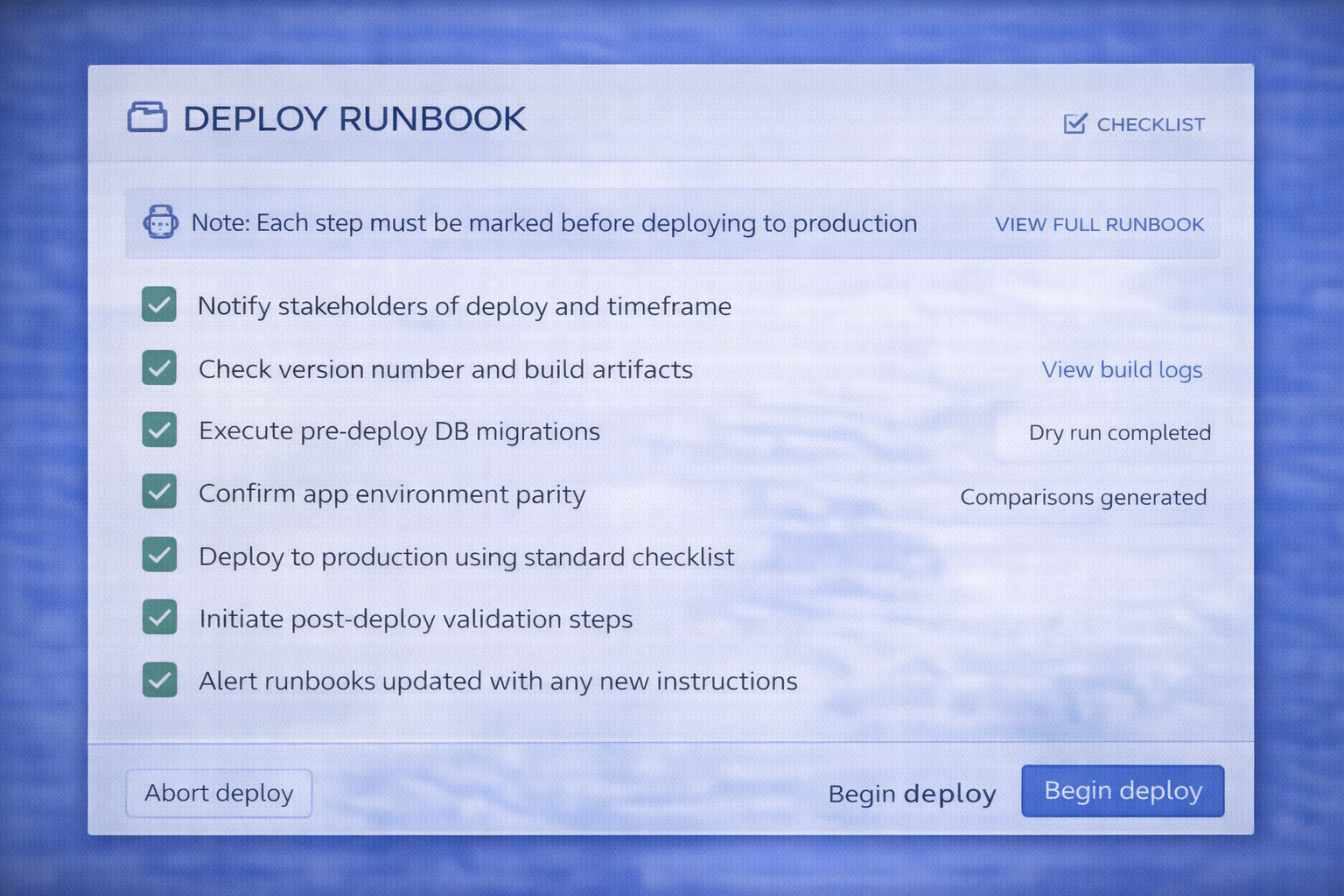
CI pipeline, build checks, environment parity, and deploy runbooks.
3) ModernizePay down debt
Refactors behind feature flags; component extraction and decoupling.
4) OptimizePerformance + reliability
Performance budgets, caching strategy, and observability improvements.
Tech debt selection rule
- Prioritize debt that blocks roadmap or creates incident risk.
- Bundle debt with feature work when touching the same area.
- Measure outcomes (build time, regressions, performance).
Deliverable definition
- Each modernization PR includes test notes + rollback plan.
- Observability updates included when behavior changes.
- Docs updated via PR (no “tribal knowledge”).
CI/CD pipeline (representative)
| Stage | Checks | Failure handling |
|---|---|---|
| Static | Lint, formatting, dependency checks | Block merge with actionable output |
| Build | Theme/plugin build, asset compilation | Artifact retention for debugging |
| Test | Unit tests + critical path smoke tests | Quarantine flaky tests, track trends |
| Perf | Performance budget / lighthouse gates (select pages) | Fail if regression exceeds threshold |
| Deploy | Promotion with checklist + rollback instructions | Rollback plan required at release time |
System map (interactive)
WordPress Platform Layer
Boundaries + reusable components
Quality & Release
CI/CD + release discipline
Observability
Detect + respond faster
WordPress Platform Layer
Architecture rules
| Rule | Constraint |
|---|---|
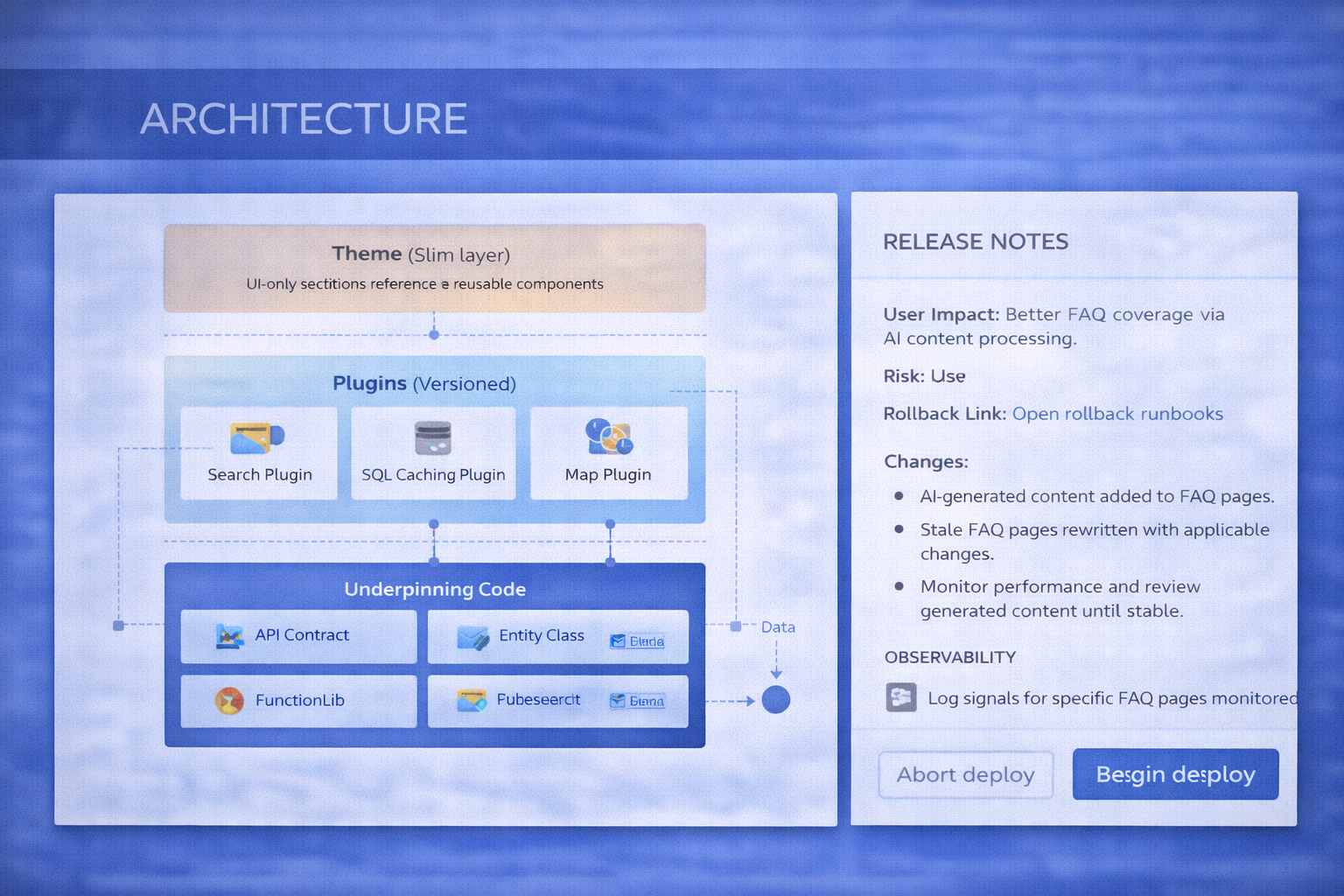
| Theme stays thin | Theme is composition; business logic lives in versioned plugins/components. |
| Reusable components | Common UI blocks defined once; variations via config. |
| Backwards compatibility | Deprecations follow a migration plan, not “surprise removals.” |
| Performance budgets | Key templates must meet performance thresholds before merge. |
Risk management
Rollout safety
- Feature flags for high-risk changes
- Canary releases for critical templates
- Rollback instructions included in release notes
- Post-deploy monitoring checklist
Regression prevention
- Critical path smoke tests
- Visual QA spot checks on key templates
- Performance regression checks
- Incident review → gating improvements
Impact (replace with your metrics)
| Outcome | What improved |
|---|---|
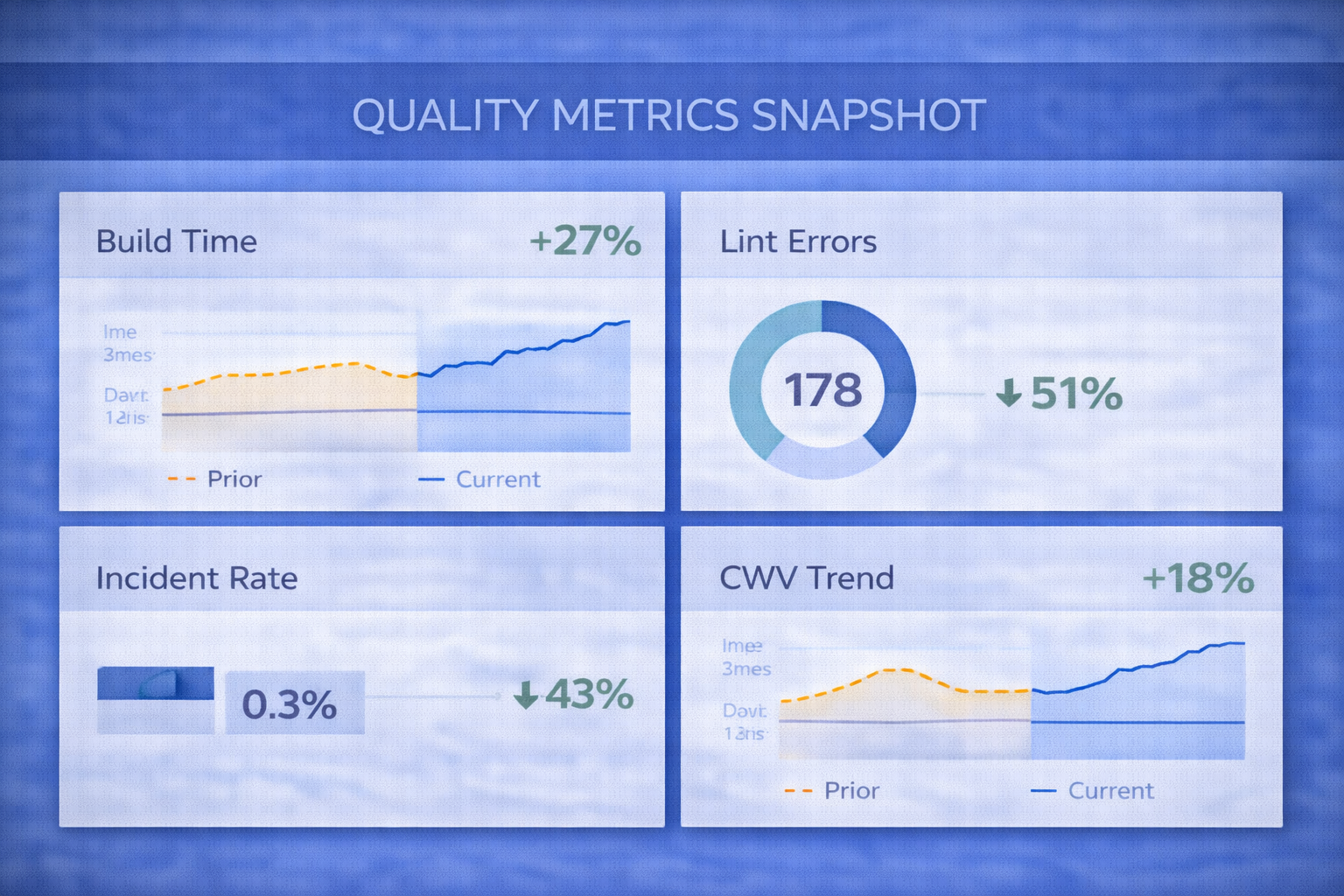
| More predictable releases | Repeatable pipeline and gating reduced release surprises. |
| Higher quality baseline | Required checks reduced defects and increased review consistency. |
| Less tech debt drag | Debt paydown prioritized where it blocked delivery and reliability. |
| Better performance posture | Performance budgets prevented regressions on key templates. |
My leadership
How I led
- Set clear engineering standards and made them measurable.
- Sequenced modernization to avoid disruption and feature freezes.
- Aligned product, QA, and engineering on release safety expectations.
- Protected the platform long-term with boundaries and reuse rules.
Signals hiring managers care about
- Shipping while modernizing
- Quality gates and release discipline
- Platform architecture boundaries
- Operational readiness (runbooks + monitoring)
© Case Study • Neighborhoods.com • WordPress Modernization