

Bender • HubSpot + Salesforce Lifecycle Automation
MarTech systems • Lead routing • Attribution • Governance
A governed lead lifecycle that scaled across global markets
Built a reliable CRM integration layer connecting HubSpot (85k+ contacts) and Salesforce, including lifecycle automation, segmentation, lead routing, and reporting primitives that aligned marketing execution to pipeline outcomes.
CRM: HubSpot
SFA: Salesforce
Focus: Attribution + routing
Mode: Governed automation
Contact scale
0K+
Built for scale without breaking routing logic.
Lifecycle stages
0+
Explicit stage rules with deterministic transitions.
Data integrity
Idempotent
Deduping + safe retries for sync actions.
Visibility
Audit-ready
Change logs and reporting confidence.
The problems
- Multiple markets created inconsistent lead definitions and handoff expectations.
- Duplicate contacts and “partial” form records created reporting noise.
- Routing rules drifted over time (hard to audit, hard to trust).
- Attribution was fragmented across pages/regions and tools.
Non-negotiables
- Deterministic lifecycle transitions (no mystery states).
- Idempotent sync operations with safe retries.
- Auditability: changes tracked + measured.
- Market-specific routing supported without forking the system.
Lifecycle contract
| Stage | Entry rule | Exit rule |
|---|---|---|
| Subscriber | Email captured with minimal intent. | Engagement threshold met (content or form). |
| Lead | Form completion + valid product interest. | Qualified by enrichment / routing criteria. |
| MQL | Meets intent + fit score threshold. | Assigned to sales queue/owner. |
| SQL | Sales accepts + opens opportunity workflow. | Opportunity created or recycled with reason. |
Capture standardization
- Unified form schemas
- Validation + normalization
- Hidden context fields
- Consent handling
Routing + assignment
- Market-aware queues
- Product-line splits
- SLA tracking
- Fallback ownership
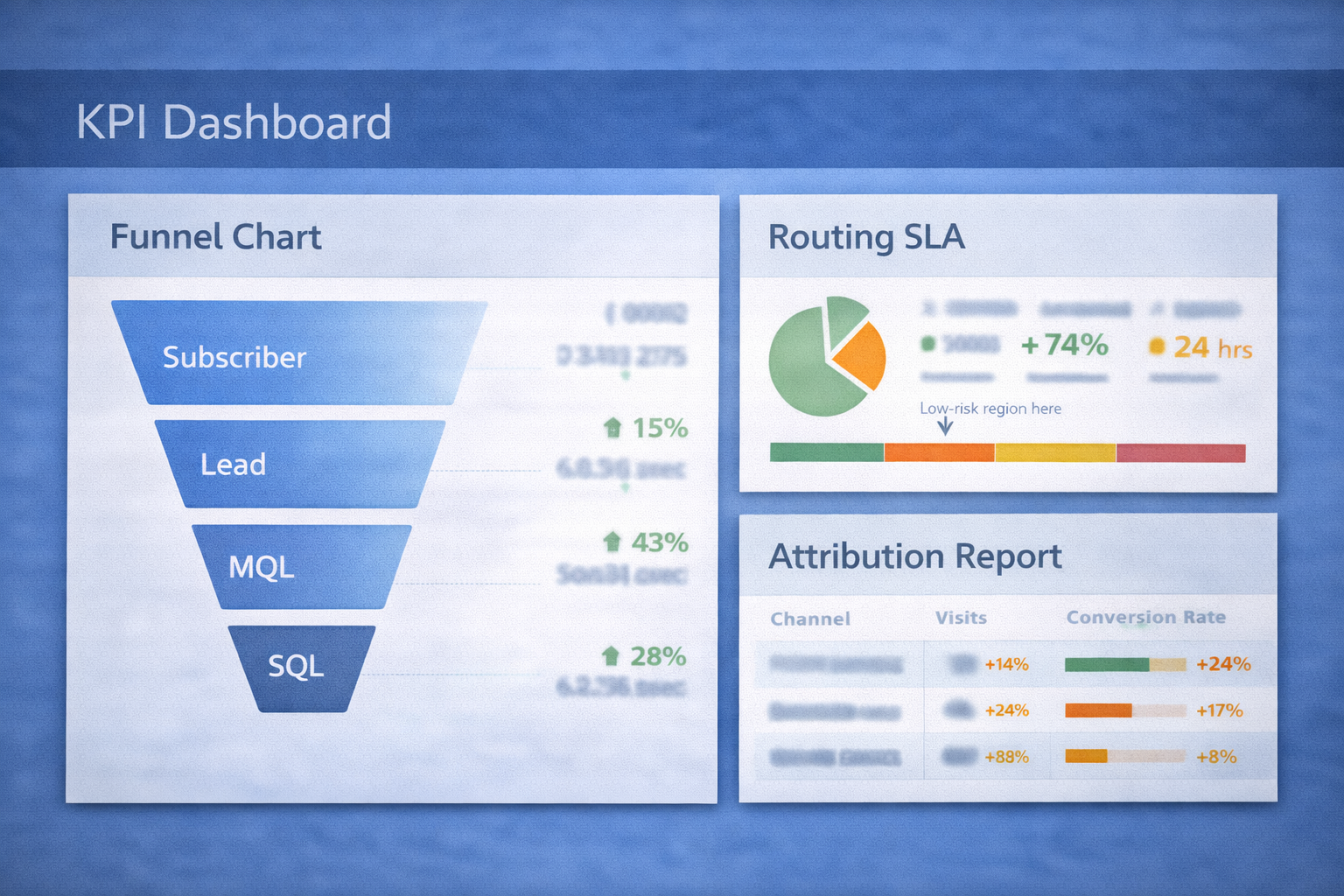
Reporting confidence
- Lifecycle event log
- Attribution mapping
- Deduping rules
- Reconciliation checks
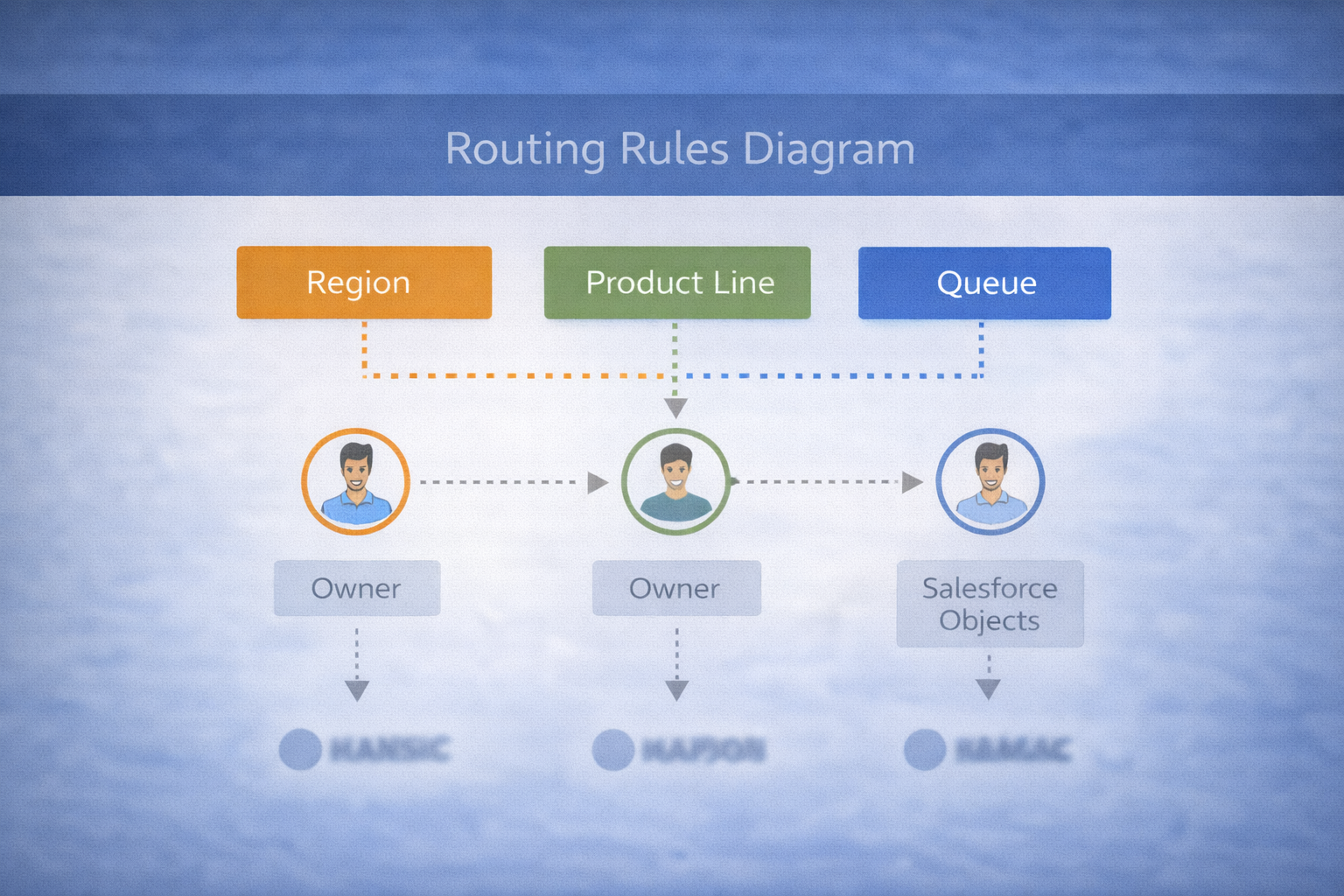
System map (interactive)
Lead Lifecycle Layer
Stage contract + event log
HubSpot Capture + Nurture
Forms, lists, workflows
Salesforce Handoff + Objects
Routing + ownership + reporting
Lead Lifecycle Layer
Sync safety checklist
| Risk | Mitigation | Signal |
|---|---|---|
| Duplicates | Deduping rules + merge strategy. | Duplicate rate dashboard |
| Partial data | Validation gates + fallback fields. | Form error monitoring |
| Drift | Versioned routing rules + approvals. | Change log + review cadence |
| Attribution gaps | UTM + source mapping standards. | Attribution completeness % |
Impact
| Outcome | What improved |
|---|---|
| Pipeline clarity | Lifecycle stages became comparable across markets and channels. |
| Sales trust | Cleaner handoffs reduced back-and-forth and “bad lead” noise. |
| Marketing leverage | Nurtures triggered reliably from lifecycle and intent signals. |
| Reporting confidence | Attribution and routing became auditable and explainable. |
My leadership
How I led
- Translated growth goals into a lifecycle contract and measurable events.
- Designed governance so global markets could evolve without fragmentation.
- Aligned marketing + sales stakeholders around “truth” definitions and SLAs.
- Protected reliability with idempotent patterns + reconciliation checks.
Best-practice highlights
- Explicit stage contract + change control
- Idempotent operations and safe retries
- Data completeness and quality monitoring
- Versioned routing logic + audits
© Case Study • Bender • HubSpot + Salesforce Lifecycle Automation