Governed automations that made delivery faster—and safer
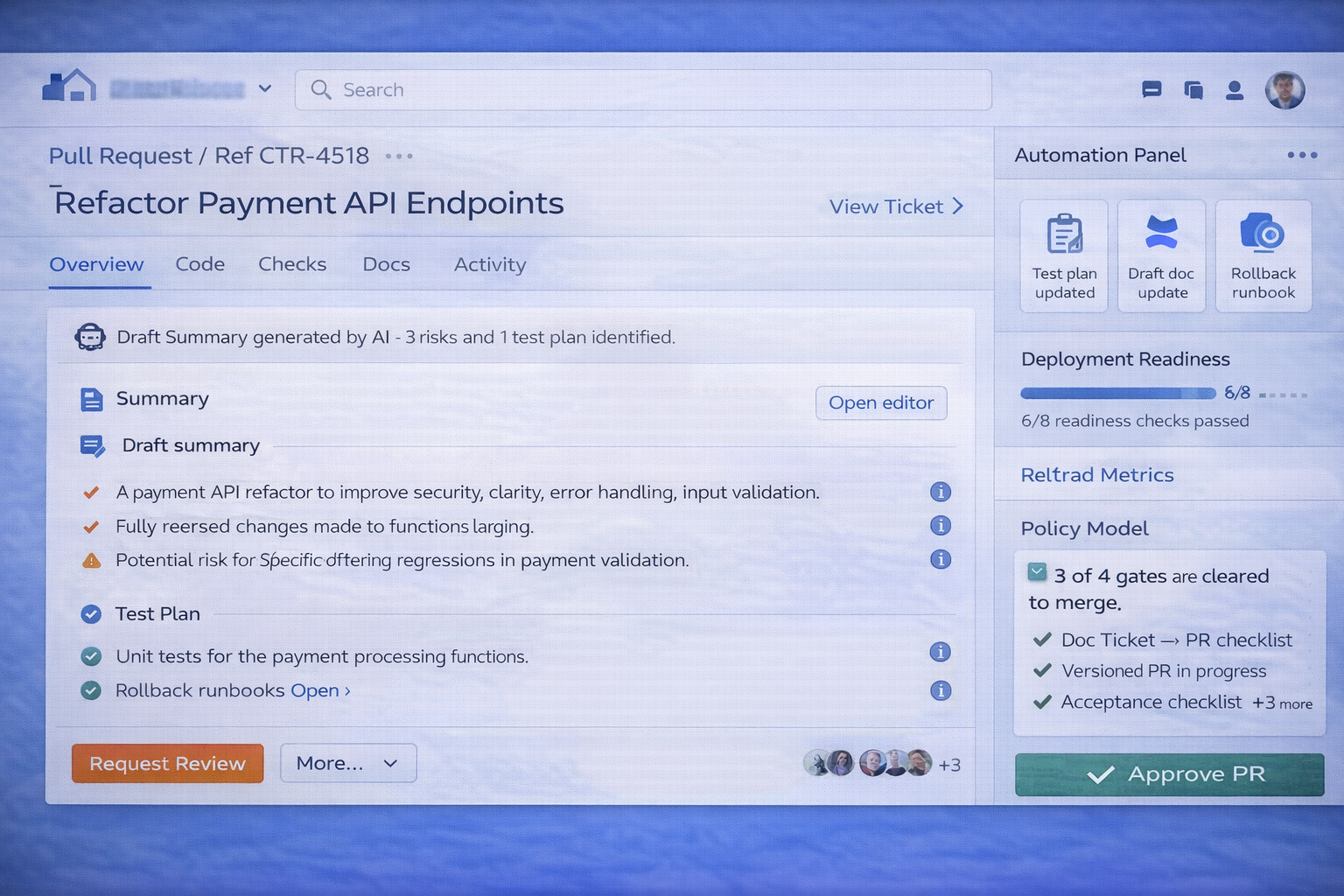
Built an AI-assisted workflow layer that connected planning, code, QA, and documentation into a single repeatable delivery system. The goal: reduce manual overhead, keep artifacts current, and make every change “reviewable + auditable” across teams.
Tools connected (representative)
- Manual status chasing and repeated “where is this at?” questions.
- Docs/diagrams quickly becoming stale after releases.
- Inconsistent acceptance criteria and QA readiness.
- Fragmented observability signals during rollouts.
- Drafting assistants: PR summaries, test notes, release notes.
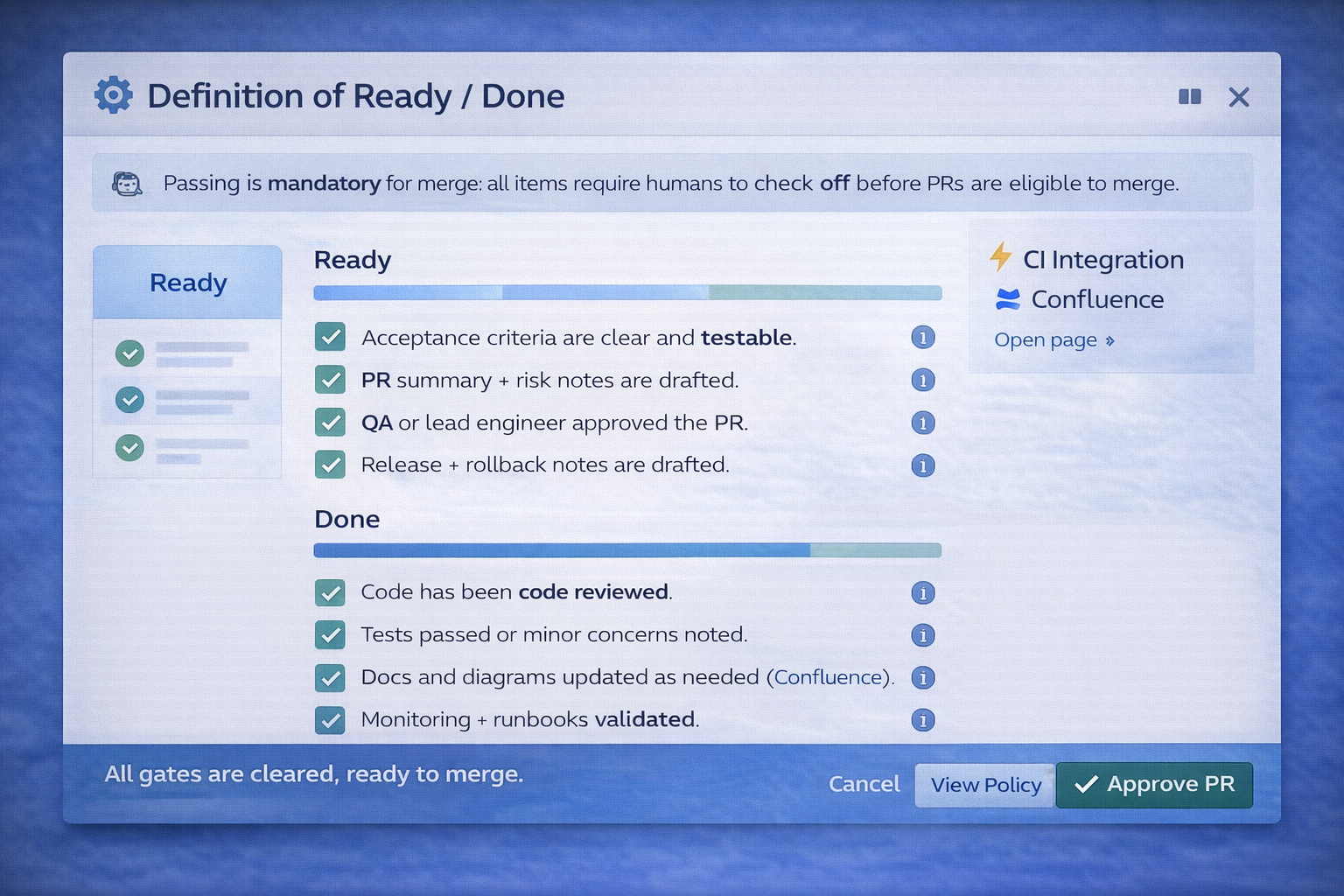
- “Definition of Ready/Done” enforcement with checklists.
- Doc/diagram updates proposed as PRs (reviewable changes).
- Deployment and incident hooks to keep context together.
Automation catalog
| Automation | What it does | Guardrail |
|---|---|---|
| Ticket → AC draft | Drafts acceptance criteria and QA scenarios from ticket context. | Requires PM/QA approval before “Ready” state. |
| PR → Release notes | Generates release notes with user impact + risk + rollback notes. | Release note PR must be approved by owner. |
| PR → Doc update PR | Suggests Confluence/doc changes as a versioned PR. | Docs only updated via reviewable changes. |
| Deploy → Observability bundle | Links dashboards, alerts, and runbooks for a release. | Standard checklist required for production deploy. |
System map (interactive)
Governed Automation Layer
Drafting + validation + approvals
Intake + Planning
Ready/Done enforcement
Code + Delivery
PR-driven artifacts
Observability + Readiness
Dashboards and runbooks in context
Governed Automation Layer
Workflow (end-to-end)
Automation drafts acceptance criteria, QA scenarios, and release notes skeleton using approved templates.
PR summary, risks, and test plan are drafted and must be confirmed by the developer + QA.
Lint/tests/quality gates run; missing artifacts block merging (unless explicitly waived with reason).
Release notes finalized; dashboards and runbooks linked; post-deploy monitoring checklist executed.
Post-release notes capture incidents, regressions, and follow-ups so the system improves over time.
Governance & safety model
| Control | Rule | Why it matters |
|---|---|---|
| Approval gates | Automation can draft; humans approve. | Prevents silent changes and “automation drift.” |
| Audit trail | Every action links to a ticket/PR and an owner. | Enables accountability and compliance posture. |
| Policy waivers | Any bypass requires a reason + reviewer sign-off. | Balances speed with transparency. |
| Secrets & scopes | Least-privilege tokens and scoped access. | Reduces security risk across integrations. |
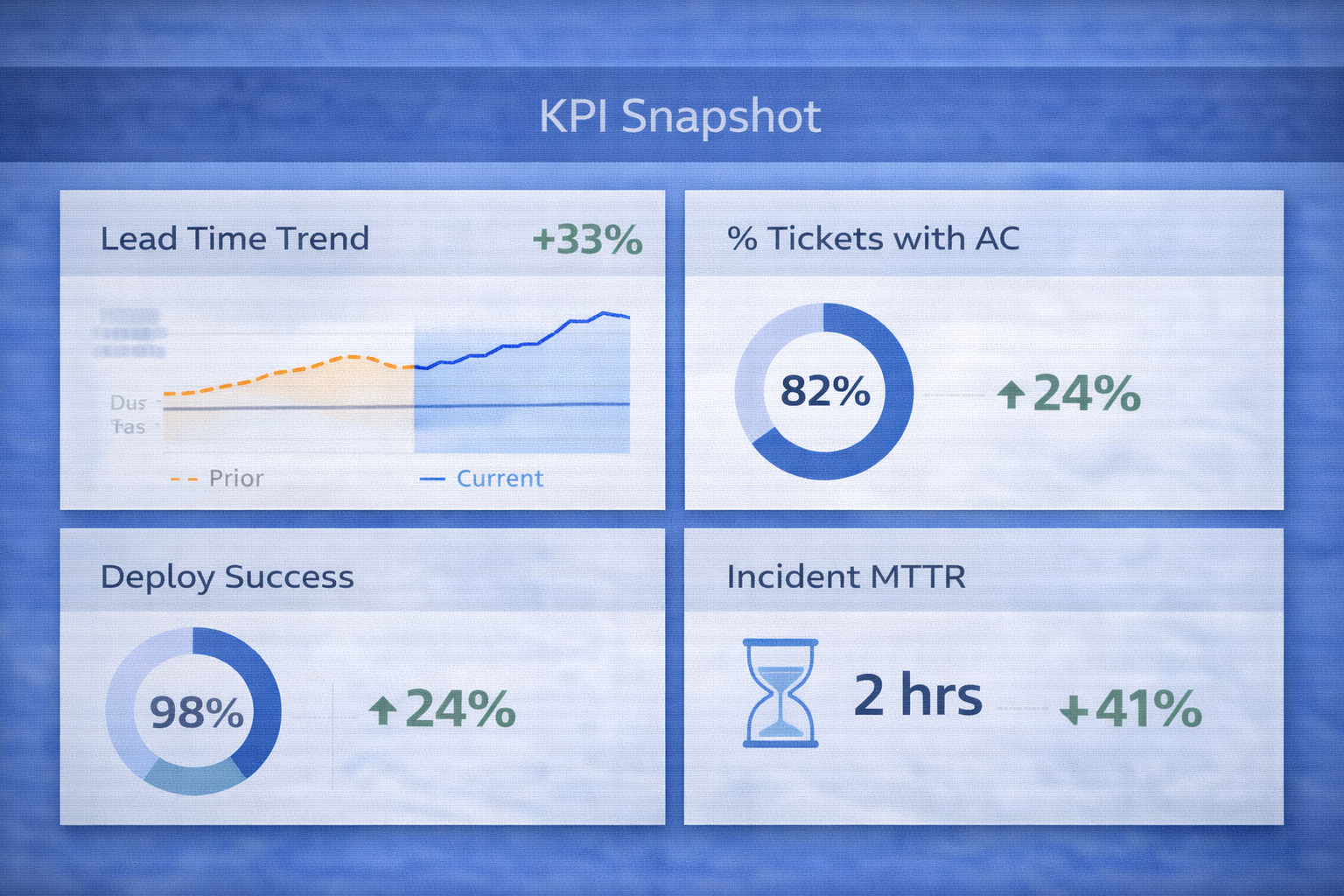
Impact (replace with your metrics)
| Outcome | What improved |
|---|---|
| Less manual overhead | Standard artifacts drafted automatically; less time spent rewriting context. |
| Higher QA readiness | Fewer missing acceptance criteria and test notes at merge time. |
| Docs don’t rot | Doc/diagram updates shipped as part of the same PR workflow. |
| Better release confidence | Deploy checklists + observability bundles reduced “unknowns.” |
My leadership
- Turned “AI ideas” into a governed system engineers trusted.
- Designed policy gates and audit trails to prevent risky automation.
- Aligned PM/QA/Eng on readiness standards and artifact ownership.
- Kept the system pragmatic: measurable wins, incremental adoption.
- Draft → approve → apply workflow (no silent edits)
- Idempotent integration patterns + scoped access
- PR-driven documentation to keep artifacts current
- Release + observability bundled as one deliverable